
Self-Understanding. Self-Compassion.
Self-Acceptance.
The dandelion serves as a powerful metaphor for the therapeutic journey.
Despite their delicate, fragile appearance, dandelions possess remarkable strength and tenacity. They are renowned for their resilience, surviving in the harshest of environments through adapting to challenging and changing conditions. Revered in ancient cultures for their medicinal properties, dandelions symbolise the power of healing. They represent transformation, each stage from bud to seeds emphasizing the promise of continuous growth and new beginnings. As well as the unpredictability of life, dandelion seeds in flight embody freedom, release, and liberation. The bright yellow flower in earliest spring is a wonderful sign of hope and renewal, a reminder that in a world of complexity, beauty and joy can lie in humble simplicity.
Therapy is the place to search within, gently exploring the parts of you that are vulnerable and fragile; your hidden fears, old wounds, the patterns that no longer serve you, the difficulties you face in responding and adapting to the challenges and changes life brings. Therapy provides the opportunity to understand and accept yourself deeply and compassionately, as you gradually name and share your pain, piecing together your story. By letting go of long-held limiting beliefs, you create room for new possibilities to emerge and healing to take place. Each positive transformation is an act of hope—a quiet bloom in the spring of your personal growth. Therapy supports you in discovering the courage and resilience needed to face the future with confidence and gratitude. It encourages you to recognise and truly appreciate the beauty that lies within and around you. The journey may be complex, but, like the humble dandelion, you can find strength, joy and renewal in the simplest moments. Therapy is your new beginning.
I am a fully qualified person-centred and integrative therapeutic counsellor, registered with the British Association for Counselling and Psychotherapy (BACP) and with enhanced DBS certification.
I offer face to face therapeutic counselling for adults, young people and children aged 6+, in a comfortable, calm, private space just 3 miles from Lincoln city centre.
I also offer online and telephone counselling for adults aged 18 and over. This allows the flexibility of accessing my services from the comfort of your own home, any other confidential space and from anywhere in the UK.
If you are interested in taking the next step, then I’d love to hear from you. I encourage you to take the opportunity of booking a free 15-minute call in which we can explore whether I can offer what you need. I aim to provide an inclusive service, so please use this initial conversation to share any ways in which I can make working with me more accessible.
I hope to accompany you on your journey towards authenticity, discovering the strengths, resilience, peace and joy that reside within you.
Thank you for visiting my website. It can be daunting to take this first step towards a brighter future; I hope very much that the information here helps you.
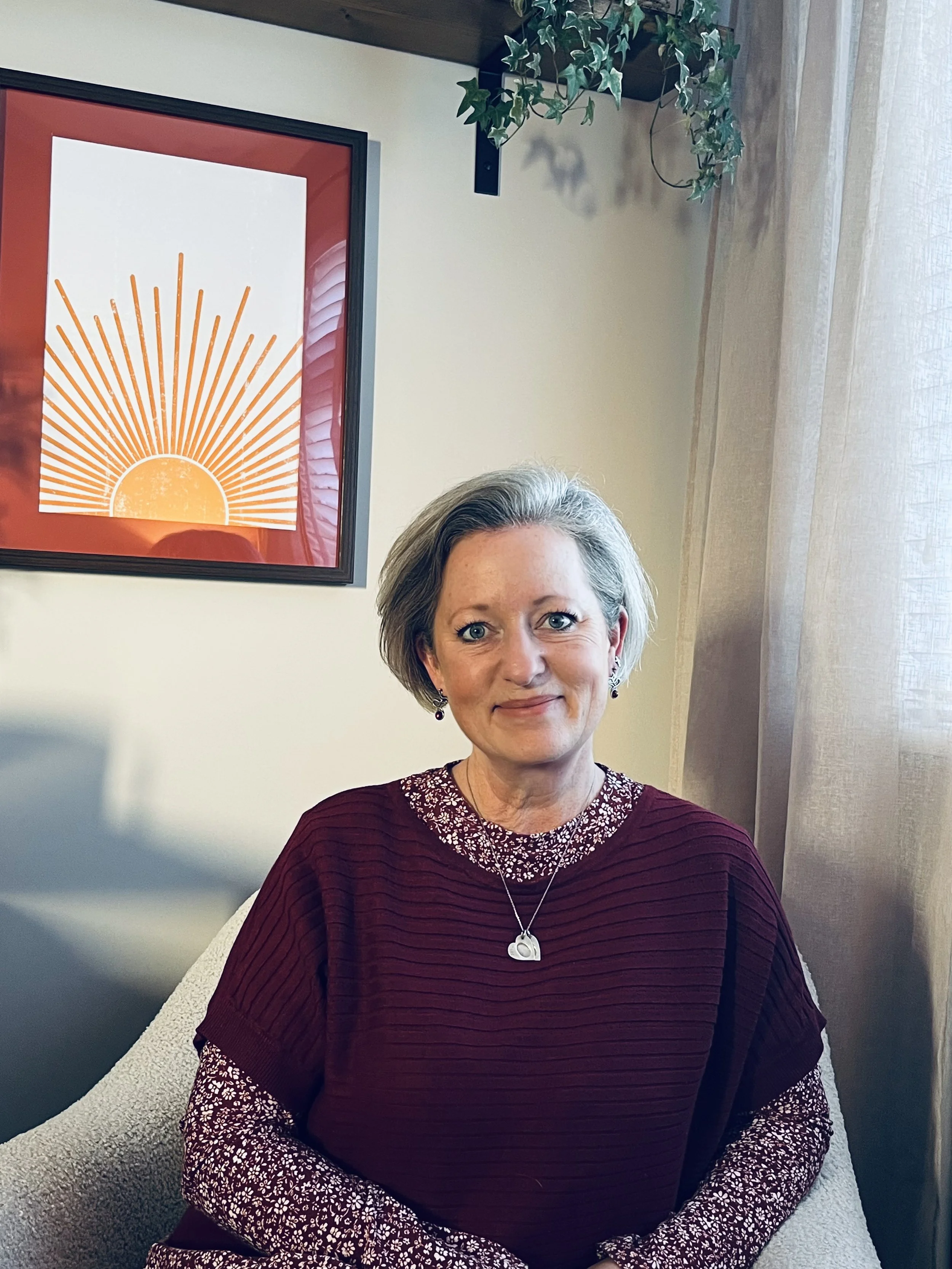
Qualifications
Level 5 Diploma in Therapeutic Counselling.
Level 2 Certificate in Counselling Skills
Bachelor of Education - Homerton College, University of Cambridge.
What is Person-Centred Therapy?
Person-centred therapy was developed by the psychologist Carl Rogers in the mid-20th century. This therapeutic approach is grounded in the belief that every individual possesses an innate ability to grow, heal, and self-actualise when provided with the right environment. The person-centred therapist’s role is to create and maintain this environment, facilitating the client’s journey towards personal development and emotional well-being.
A person-centred therapist adopts a non-directive approach, which means they do not lead, instruct, or offer solutions to the client’s issues. Instead, they trust the client’s capacity to find their own answers when provided with support and understanding.
Sessions are typically client-led, meaning the client decides what they wish to discuss. The therapist respects the client’s autonomy, only gently guiding the conversation if necessary to maintain focus or clarity. Confidentiality and clear boundaries are maintained to ensure the client feels secure.
A person-centred therapist works by facilitating a supportive and empathetic environment where the client feels heard, valued, and understood. Through unconditional positive regard, empathy, and genuineness, the therapist empowers the client to explore within themselves, overcome challenges, and achieve personal growth at their own pace.